Photo by CHUTTERSNAP on Unsplash
WorldExecutivesDigets | Eco-design: The ins and outs of sustainable development | Eco-design seeks to take all environmental aspects into account during all stages of the product development process to create a truly sustainable end result. It means striving to create a product with a low impact on the environment that can remain sustainable throughout their lifetime. Unsustainable practices have been criticized as unsustainable since the days of the Industrial Revolution, while in the early 70s, Austrian-born designer Victor Papanek discussed the issues associated with the waste left as a byproduct of industrial design, as well as the fact that the materials and processes would often cause environmental pollution.
The field of ecological design is still growing and evolving, so let’s examine some of the changes that are shifting the industry right now.
Fungi homes
The typical house emits anywhere between fifteen and one hundred tons of CO2, depending on the materials you use and the size of the building, during the construction process. To estimate how many emissions are released into the atmosphere over a lifetime is impossible since it would vary too much depending on your individual habits. It seems that change is on the way in this regard as well because a team of architects has recently created bricks made of fungi that could potentially cut down a great deal of the carbon footprint that comes with building a new house.
Mycelium, the fungal threads growing beneath mushrooms, has been used before as part of sustainable packaging options since 2007. It grows fast by feeding on waste, creating bricks that are very solid and can be used to create a material that is fully compostable, self-healing, and essentially a living organism. NASA has joined forces with some of the architects involved in studying this fungi-based material that can be used to create homes in outer space.
Considerations
There are several things that make certain designs eco-friendlier than others. The use of local materials reduces the environmental costs associated with shipping, including the emissions generated from transportation and fuel consumption. Replacing some of the materials with their recycled alternative can also help, and reclaimed materials are becoming increasingly popular in construction. There’s an increasing demand for off-grid homes that are separated from conventional energy sources and receive their power through passive systems.
The LCA provides entrepreneurs with massive amounts of layered data that can be used to deduce the total environmental impact of a product during all stages of its life. This way, it is much simpler to know exactly which areas you need to modify. However, industrial processes are not the only ones benefiting from sustainability. Eco-design has found applications in environmental art as well. Ever since the 20th century, when Georges Braque and Pablo Picasso used newsprints and other found materials to create art pieces.
Vertical forest
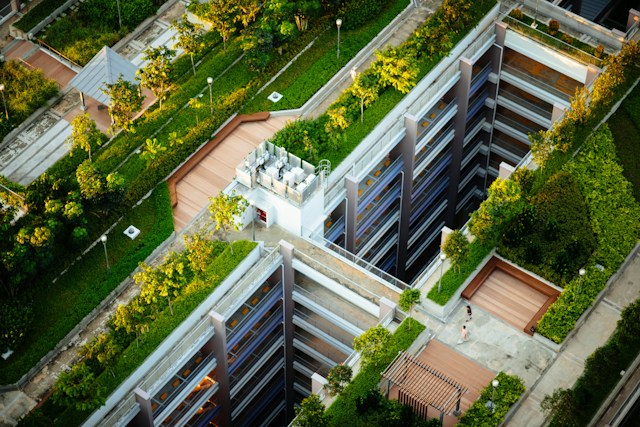
Italian architect Stefano Boeri, is known for creating the Vertical Forest of Milan, a complex of two skyscrapers used for residential purposes, which Boeri himself called “A house for trees inhabited by humans.”, as well as the Villa Méditerranée in Marseille, has recently received the European Lung Foundation Award for his contribution to improving air quality. Now, Utrecht is set to receive a similar treatment as Milan as part of a project set to reintroduce green into urban landscapes.
300 trees and roughly 10,000 plants will turn a tower in the city into a real, living, and breathing forest. The Wonderwoods Vertical Forest project is still ongoing as of November 2023, and the first residents are expected to move in during the summer of 2024. The ecosystem will be able to produce 41 tons of oxygen yearly, as well as remove CO2 and dust particles from the atmosphere. Plants help with noise pollution as well, and during the summer, the trees reduce the heat island effect. Overall, the project isn’t just good for the environment but also for human health and well-being.
Green clothing
Sustainable clothing is an integral part of the fight towards a more environmentally friendly world. The textile industry contributes to roughly 10% of the global greenhouse gas emissions, and that’s just accounting for production. The rise of fast fashion has led many to shop for more items than they need. Out of them, a considerable portion is never worn, while others are discarded after being worn only a few times. Most of them aren’t recycled.
Many producers have started using quadrant order to determine how they can improve their processes and make clothing that aligns with environmental protection. Using recycled materials and plant dyes minimizes the impact of the fabric and can also create a more unique appearance. However, many believe that when it comes to clothing, a change in the consumer mindset is necessary as well. Trends are changing much faster than they used to in the past, leaving people to want to buy new items constantly.
Now, microtrends have become more visible as well, and some trends can only be realistically sustained for a few weeks. According to a 2017 report, roughly 792 to 931 billion cubic meters of water are used every year to produce new clothing pieces. That is around 4% of the entire freshwater extraction on the planet. But when you think that there’s a mountain of discarded clothing in the Atacama Desert in the north of Chile that is fully visible from space and which is growing by about 39,000 tons each year, it’s plain to see that something needs to change.
The bottom line
The state of the environment should concern everybody, and all people should make a commitment to change. From learning to become more conscious shoppers to remembering to recycle everything, even if it is a little less convenient than just chucking everything together in a bin, looking for brands that support sustainable development and buying from them are some of the fundamental aspects.
Brands must also commit to producing less waste and minimizing the adverse effects their manufacturing processes have on the environment. Helping the planet is something that will take consistent effort, and everyone must play their part.
Photo by CHUTTERSNAP on Unsplash